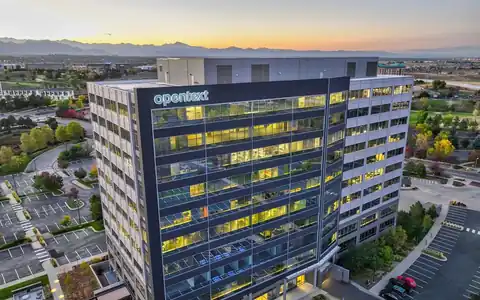
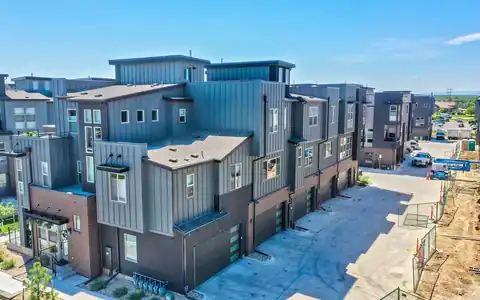
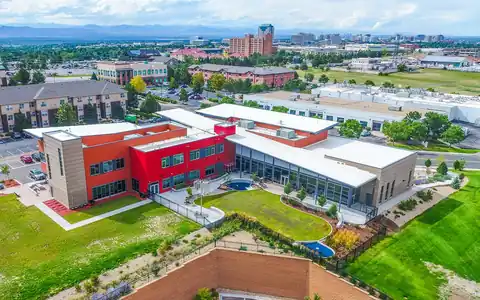
360 drone video in Denver gives viewers control of the camera. As the aircraft glides over a campus, resort, venue, or development, each person chooses where to look, whether that is the river trail below, the downtown skyline, or the mountain backdrop. It is immersive in a way standard aerial video is not, and it works well for audiences who will explore at their own pace.
Rocky Mountain Photography has filmed aerial video around Denver since brothers Jeff and Nick Perry founded the company in 2016. Spherical video needs different planning than a cinematic flyover, because there is no single frame to compose and everything around the aircraft is visible. We design routes, speeds, and heights that keep the footage comfortable to watch, especially for viewers wearing headsets.
Planning a flight for spherical footage
A traditional drone shot points the camera at a subject. A 360 flight treats the whole scene as the subject, so the route matters more than the angle. Pilots fly slower and smoother than usual, avoid sudden turns and climbs that can make headset viewers uneasy, and keep enough distance from structures that nothing looms too close to the lens. We usually plan a few short, purposeful moves instead of one long wandering flight: an approach along the entrance drive, a slow rise over the main building, and a hover at a viewpoint with the best panorama. Each segment is easier to edit and easier for viewers to follow. Before any of this, we check airspace authorization for the site and confirm the heights that are approved for the flight.
Stitching, stabilization, and export
After the flight, footage is stitched into a seamless sphere, stabilized so the horizon stays level, and color corrected so the view matches in every direction. We remove or minimize visible parts of the aircraft where possible, and we can add title cards, a logo, or simple text callouts that stay readable as the viewer turns. Final files are MP4 videos with the 360 metadata that YouTube, Facebook, and most VR players need to recognize them as spherical. Because 360 video spreads its resolution across the whole sphere, it looks softer than standard 4K footage when viewed on a small phone screen. We explain that tradeoff up front and often recommend pairing the 360 video with a traditional drone videography edit for websites.